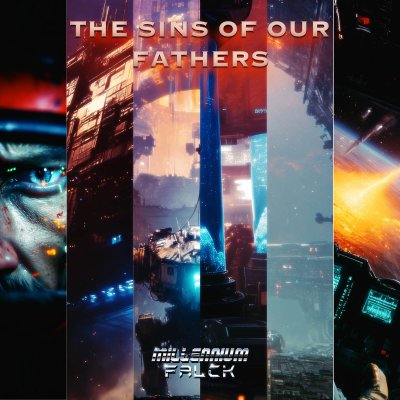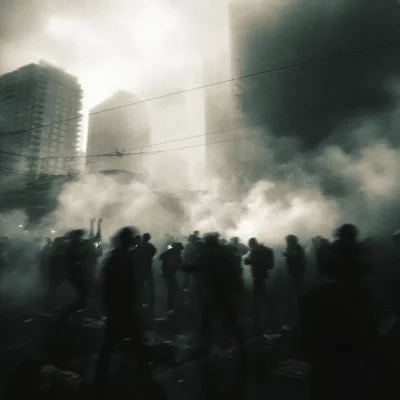


Before the Soul Prisms and the Robot Cores, there was the comet. These ten years represent the final era of Old Earth—a period defined by technological hope, industrial hubris, and ultimate betrayal.
Chronology of the Collapse
| Year | Event | Status |
| 2026 | Discovery | NHNN confirms Apophis is on a trajectory toward Earth. |
| 2030 | The Realization | UN admits total deflection is unlikely; global civil unrest begins. |
| 2034 | The False Dawn | Seven megacities, including Neo Helsinki, reach near-completion. |
| 2036 | The Fall | UN announces failure; Apophis impacts Earth. |
2026: The Discovery
The decade began with practiced calm. Jordan Tellfast of the Neo Helsinki News Network (NHNN) broke the news that the United Aerospace Division had confirmed the trajectory of Apophis. At the time, the United Nations maintained that the comet posed no threat and that a “comprehensive defense strategy” involving nuclear warheads would alter its course. Humanity reacted with a mixture of disbelief and accepted hope.
2030: The Turn
By 2030, the hope had soured. Civil unrest erupted across forty-three nations as word leaked that the UN might not be able to fully divert the comet. In the distance, the skeletal frameworks of the megacity domes—monuments to both ingenuity and fear—began to rise like the “ribs of some massive beast”.
2034: The False Dawn
This year was defined by welding sparks and desperation. The seven megacities—Neo Helsinki, New Eden, Pacifica, and others—were nearing completion. Despite the grand architecture, the truth was hollow; lead scientists admitted that while the shield domes protected against tsunamis and fallout, they offered no salvation against a direct hit.
2036: The Final Days
The President of the United Nations stood before a black backdrop to deliver the end of history . He confirmed that while portions of the comet were diverted, the main body would impact Earth within eighteen days. His final directive was simple: “Pray to any gods you believe. Even if they won’t answer” .
The Personal Toll: The Hill of Tähtitorninmäki
On the day before impact, the “sins” of the fathers were codified. Peter Ares, then part of the early Robot Core prototype division, abandoned Audencia Dura on a hill overlooking the skeletal frame of Neo Helsinki .
“Love is a luxury we can no longer afford.” Ares claimed, choosing the future of the Core over his own family.
He walked toward his transport and his destiny as Lord Commander Ares, unaware that Audencia was carrying the son who would one day haunt him in the red dust of Mars.
I’ve designed this timeline to be the haunting backdrop of our first six weekly “episodes” starting March 19th.