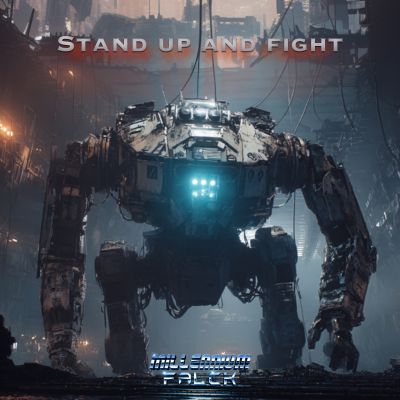


I’m creating a science fiction universe called FOTT using AI tools, while simultaneously living through the exact kind of technological revolution that sci-fi writers have been warning/dreaming about for decades. The irony isn’t lost on me.
I just read an article in Helsingin Sanomat about Marko Kleinsepp, who generates Finnish music with Suno.ai under the name Zepala. His song “Lähetkö landelle” hit the top of Spotify’s viral charts with over 700,000 streams. Most listeners had no idea it was AI-generated. His take? “We’re living in a transition phase, but a year from now this will already be normal.”
That hit me hard. Here I am, crafting a futuristic narrative, and the future is already here.
When the fiction becomes reality
FOTT exists in a world where technology has fundamentally altered human experience. And I’m building that world using AI to generate story elements, images, and videos. The tools I’m using to imagine tomorrow are the same tools that are reshaping creativity today.
It’s recursive. It’s strange. It’s exactly the kind of scenario that would appear in a science fiction story about artists in the early days of transformative technology.
The HS article mentioned another case: The Velvet Sundown, a completely AI-generated band that accumulated a million streams before anyone realized there was no human band at all. Just algorithms, generating music that made people feel something.
This is the world we’re in now. This is the world FOTT is being born into.
The line I won't cross (yet)
Here’s where it gets personal: I use AI for FOTT’s visuals, for narrative assistance, for worldbuilding. But the music? That stays human. Every note, every melody, every composition comes from me sitting with instruments, making choices, feeling my way through sound.
Why?
I wish I had a more rational answer. It’s not about AI being incapable—Kleinsepp’s success proves AI can create music people genuinely connect with. It’s something deeper, something almost primal. The music is where I draw the line between tool and creator, between assistance and replacement.
Maybe it’s because music is how I process the world. Maybe it’s because composition is where I feel most human. Or maybe I’m just clinging to something familiar while everything else shifts beneath my feet.
The questions FOTT asks (and that I'm asking myself)
Creating FOTT has forced me to confront questions that aren’t just fictional anymore:
- What makes creativity human? If an algorithm can generate a song that moves people to tears, or an image that stops them scrolling, does the source matter? The article quotes legal expert Anton Ylikallio: AI-generated music can’t receive copyright because it “doesn’t reflect anyone’s creative choices.” But Kleinsepp is making creative choices—he writes the lyrics, crafts the prompts, curates the output. Where’s the line?
- Does authenticity require suffering? There’s a romantic notion that “real” art requires struggle, time, human imperfection. But what if that’s just gatekeeping? What if efficiency doesn’t diminish value?
- Can we separate the art from its origin? When 98% of Zepala’s feedback is positive and people are using his songs in thousands of TikTok videos, clearly the music is working. Does it matter that silicon generated it instead of neurons?
These aren’t hypothetical questions for a fictional universe anymore. They’re questions about the world we’re living in right now.
Why FOTT's human core matters more than ever
The strangest part of all this? FOTT might need to evolve its narrative to reflect the reality we’re living through. When I started this project, AI-generated art felt like science fiction. Now it’s just… reality. Kleinsepp releases over a hundred AI tracks a year. The Velvet Sundown fooled a million people. By the time FOTT is fully realized, we might be living in a world where the distinction between human and AI art has collapsed entirely.
Or maybe not. Maybe there will be a renaissance of obviously human creation. Maybe live performances will become more valuable. Maybe people will crave the imperfect, the inefficient, the unmistakably human.
I don’t know. Nobody does.
But I do know this: creating FOTT during this specific moment in history—this weird, transitional period where we’re simultaneously creating the future and living in it—means the project itself becomes a kind of time capsule. A document of what it felt like to be an artist when the rules were changing in real-time.
What I'm betting on
I’m betting that in ten years, people will still want stories that feel human, even if they’re wrapped in AI-generated visuals. I’m betting that FOTT’s human-composed soundtrack will give it a soul that purely algorithmic projects can’t replicate—at least not yet.
I’m betting that the irony of using AI tools to create science fiction about humanity won’t be lost on the audience. In fact, I think it might be the point.
Kleinsepp said we’re in a transition phase, and he’s right. But transitions are where the most interesting things happen. Where old and new collide. Where artists have to choose what matters.
For FOTT, what matters is keeping something human at the core, even as I embrace the tools of the future. Not because I’m afraid of AI, but because the tension between human and artificial is exactly what makes this moment—and this project—compelling.
The future is here. We’re living in the science fiction.
And I’m going to compose my way through it.